
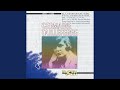
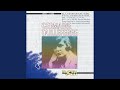
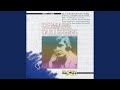
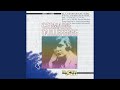






Germaine Tailleferre (1892-1983)
Piano Trio (1916-17/1978)
 The legendary 20th-century French pedagogue Nadia Boulanger once gravely advised, “Do not take up music unless you would rather die than not do so.” It would seem that her contemporary and compatriot, Germaine Tailleferre, was a living example. Defying significant opposition from her father, she learned piano and started composing as a young child. Secretly, she entered the Paris Conservatoire as a twelve-year-old piano prodigy. There, Tailleferre met and befriended some of the other young composers that would establish “a scene” in Montmartre and Montparnasse haunts becoming an entourage first gathered around Erik Satie and then Jean Cocteau, eventually dubbed “Les Six” by critic Henri Collet. Satie appeared to be particularly taken with the music of Tailleferre: he affectionately called her his “musical daughter.”
The only woman composer in Les Six (Germaine Tailleferre, Darius Milhaud, Francis Poulenc, Arthur Honegger, Georges Auric, and Louis Durey), Tailleferre enjoyed somewhat of a spotlight in the 1920s, composing some of her finest works and befriending Ravel, from whom she received guidance and encouragement. Time passed, and her reputation faded. Tailleferre endured two abusive marriages where, again, she received significant opposition to her musical pursuits. WWII brought further disruption as she fled to Philadelphia for temporary refuge, leaving her manuscripts behind. And yet, throughout her life, she composed prodigiously right up to a few weeks before her death in 1983 at the age of 91! Her oeuvre exceeds some 200 works spanning all the important music genres. There are at least 24 chamber music works featuring three violin sonatas, a string quartet, and this piano trio, all highly regarded compositions. Tailleferre “took up” music and persevered as if she would have rather died not to.
Her one piano trio comprising four short movements offers a particularly interesting introduction to her music as it was composed in two phases: the first and third movements date from 1916-17 (when she was around 25 just before Les Six) while the second and fourth movements are dated 1978, some 60 years later when Tailleferre revisited the trio at the age 86! Commenters have cited this to demonstrate the consistency and longevity of her artistry. The four movements work beautifully together as a coherent whole perhaps particularly because they are interleaved. The two early movements primarily reflect a French sensibility particularly the general impressionistic styles of Debussy, Ravel, and perhaps Fauré, while the two later movements bristle with the rhythmic flair of Neoclassicism and particularly the influence of Stravinsky (and Ravel).
The first movement is dreamy and impressionistic featuring a special sonority produced by the violin and cello in unison, octaves apart, creating an exotic “silvery” tone familiar from the music of Debussy and Ravel. A modal melody passes through each of the instruments as the accompanying parts fill the space with rhythmic motives and chromatic lines in a most enchanting texture. The second movement sports a fetching, extroverted tune, tight and trim as a concise eight-bar phrase alternates with a contrasting section in a steady cycle of repetition and variation. This “classical” form sustains a persistent and mesmeric pulse enabling the comedic play of rhythmic rupture. The style almost suggests Stravinsky’s Petrushka in miniature with music that is miraculously as vibrant.
The third movement “returns” to 1917 with a gently swaying but well-articulated triple meter. Lithe and limpid, it is less a dance than a sweet song with just a touch of the salon, a dash of melancholic nostalgia, and a reverie for the solo piano. First “black and white,” the texture becomes “colorized” by the strings, and finally “electrified” in the end by the chic of dominant sevenths, a musical premonition of the approaching Jazz age. The finale jumps forward again to 1978 with a return of the Neoclassical in a bold march full of crunchy dissonance and dazzling rhythms, again recalling Stravinsky with urban bustle, the motion of modernity. Floating and interweaving throughout, of a different mode and sense of time, is a pentatonic theme, vaguely Asian, perhaps the glinting commotion of Javanese Gamelan and yet another signature of place and time as Tailleferre seems to recall the rich, complex musical scene of Paris in her youth.

