



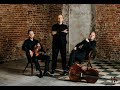

Grzegorz Fitelberg (1879-1953) was born into a Polish-Jewish family in Latvia, but soon after his birth, his family relocated to Warsaw. He studied at the Warsaw Conservatory, violin with Stanisław Barcewicz and composition with Zygmunt Noskowski, after which he was a violinist in the Warsaw Philharmonic. It is from this time, around 1900, that he started composing. Most of his works from this period were for strings. His first violin sonata won an award at the Paderewski competition in Leipzig in 1898. Composition eventually took a backseat to his interest in conducting. During the first decades of the 20th century, he conducted the Berlin and Warsaw Philharmonic orchestras as well as the Vienna State Opera Orchestra. He was invited to serve as a guest conductor throughout Europe, South America, and North America. After globe-trotting, he then served as the permanent conductor of the Warsaw Philharmonic for more than 2 decades. He also helped found the "Publishing Company of Young Polish Composers," which published and performed his works as well as those of Szymanowski, Karłowicz, and Różycki.
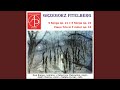
Outside of two sonatas, his only chamber music was the Piano Trio in f minor, Op.10, composed in 1901. It was awarded the first prize in the prestigious Count Maurice Zamoyski Competition of Warsaw in 1901. The trio was dedicated to Emil Młynarski (1870-1935), a virtuoso violinist, composer, conductor, and founder of the Warsaw Philharmonic. It is in four movements and begins with an emotionally powerful Allegro moderato e appassionato. The second movement, Scherzo, allegro vivace-Tempo di Obertas, is based on the Polish folk dance, the Oberek, which is a lively dance characterized by spins and jumps. It is derived from the Polish word meaning to spin. Next comes a deeply expressive Adagio non troppo lento, bearing the title Elegia. The highly emotional main theme of the finale, Allegro agitato, recalls the themes from the opening movement.
It would not be amiss to call this massive work a masterpiece. It belongs in the repertoire and deserves concert performance. It can also be managed by experienced amateurs of good technical standard.

