
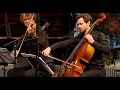
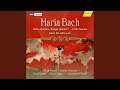



Maria Bach (1896-1978) was born in Vienna into an old, prominent noble family. Her full name was Emilie Maria Baroness von Bach. In 1919, with the dissolution of the Austrian Habsburg Empire, the nobility was abolished, and hence she dropped the von in front of her family name. Before entering the Vienna Academy of Music, she took violin, viola, and piano lessons. She began studying composition at the Academy with Joseph Marx in 1919. She became a prolific composer, writing a huge amount of songs and piano music, but she also penned two string quartets, a string quintet, a piano quartet, and this piano quintet.
Her Volga Quintet (Wolgaquintett as it is known in German) was composed during 1927-1928. It is a massive work which has been called the most significant chamber work of the late Romantic era. Some critics have noted that it combines elements of Brahms with the music of the French Impressionists. It is in three movements: Ruhig bewegt (tranquil, yet moving), Variationen über das Wolgalied (variations on the Volga Boatmen's song), and Laufen lassen (let go, or keep running). The opening movement begins gently with a French delicacy before the powerful main section appears. There are echoes of Fauré and Debussy. The middle movement, nearly 20 minutes in length, is the center of gravity of the quintet. It is thought that she chose the Song of the Volga Boatmen as the theme because of her friendship with the Russian composer and conductor Ivan Boutnikoff, who exposed her to Russian folk music. The Song of the Volga Boatmen was first published by the Russian composer Mily Balakirov in 1866. It was supposedly sung by the barge haulers on the Volga River. The title of the song is taken from the refrain, which can be translated from the Russian as "Yo, Heave Ho!" There are 12 variations of contrasting moods and tempos. Our soundbite presents half of them. The movement by itself is a tour de force. The brisk, exciting, and hard-driving finale brings the work to a successful close.
Hailed as a masterwork, it seems an obvious choice for the concert hall.
